
By Anselm Desmond Nicol – 10th December, 2025
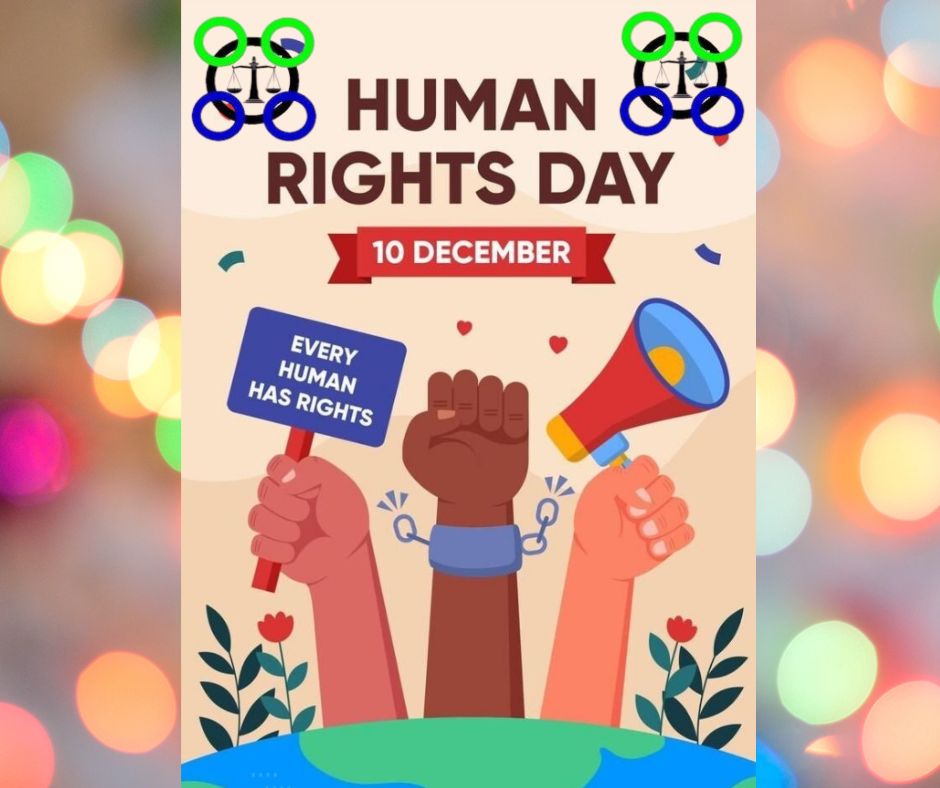
International Human Rights Day offers the world a moment to pause and reflect on the values that hold our societies together. The 2025 theme, “Human Rights: Our Everyday Essentials,” reminds us that rights are not abstract concepts reserved for legal textbooks, treaties, or courtrooms. They shape the way we live, work, learn, speak, worship and relate to one another. They influence whether a child goes to school, whether a woman is safe both inside and outside her home, whether a person can express an opinion without fear and whether communities can thrive with dignity. This theme encourages us to see human rights not as distant ideals but as practical tools that guide everyday life.
Human rights are often grouped into civil, political, economic, social and cultural rights. Each category touches ordinary experiences. Civil and political rights protect freedoms that help define who we are. They include the right to speak without intimidation, the right to vote, the right to protest peacefully and the right to fair treatment before the law. These freedoms provide the foundation for accountable governance. They are essential for building trust between the people and the institutions that serve them. When these rights are respected, societies benefit from active citizenship and meaningful participation. When they are restricted, fear replaces confidence and public life suffers.
Economic, social and cultural rights shape our quality of life. These include the right to education, healthcare, work, housing and social protection. They also recognize the importance of cultural identity and participation. In practical terms, these rights determine whether families can access clean water, whether young people can gain skills that open opportunities and whether workers can earn a fair wage. They determine how societies care for the vulnerable. While they may seem like policy issues, they are fundamentally human rights obligations that states must uphold. A society that strives to meet these obligations becomes stronger, healthier and more resilient.
This year’s theme also encourages us to look closely at the idea of universality. Human rights belong to everyone, without condition. They do not depend on age, gender, ethnicity, religion, nationality, ability, or social status. This universal nature is what gives human rights their force. It also makes them an ethical compass when societies face pressure, fear, or division. At a time when inequalities are widening and discrimination persists in many forms, reaffirming the universal nature of rights is essential. It challenges us to correct injustice, strengthen inclusion and ensure that no one is left behind.
Looking at global trends, the message of 2025 comes at a critical moment. Many regions are facing rising conflict, displacement, climate-related hardships and shrinking civic space. Economic shocks continue to affect communities, especially those already struggling with poverty or limited access to services. Children are missing out on education. Women and girls continue to experience violence. Journalists and activists face threats for speaking up. These issues are not isolated; they reveal the deep connection between rights and daily realities. When rights are denied, everyday life becomes harder. When rights are protected, dignity becomes possible.
International Human Rights Day challenges institutions to examine their responsibilities. Governments must translate commitments into action. This means creating laws that reflect international human rights standards, building strong justice systems and ensuring that policies reach the people who need them most. It means addressing corruption, improving public services and supporting independent oversight. But responsibility does not end with institutions. Communities, civil society and individuals each have a part to play. Human rights grow stronger when citizens understand them, claim them and defend them. They grow stronger when neighbours support one another, when teachers promote respect and when religious and community leaders encourage dignity and peace.
Another important part of this year’s theme is the daily practice of rights. Human rights are not only exercised in the moments when they are threatened. They become meaningful when woven into everyday interactions. Respect begins in families, schools, workplaces and public spaces. How we speak to others, how we treat people who differ from us and how we respond to inequality all reflect our commitment to human rights. Even simple acts—listening, showing fairness, offering help, or standing up against discrimination—support the values that international human rights law seeks to protect. These actions build cultures of respect from the ground up.
Technology is also shaping the way human rights are understood today. Digital platforms have expanded access to information and created new opportunities for participation. At the same time, they have opened the door to misinformation, surveillance and new forms of exclusion. The principle that human rights apply everywhere now extends to the digital world. Just as people deserve safety, privacy and fairness offline, they deserve them online. The theme reminds governments and tech companies to design systems that protect users, promote transparency and support accountability. Digital rights are no longer a future issue; they are a daily essential.
As we mark International Human Rights Day 2025, it is important to recognize the work of those who continue to defend rights in difficult environments. Human rights defenders, journalists, civil society groups, youth leaders and community volunteers play an essential role. Their courage helps bring attention to abuses, supports survivors and inspires change. Many face threats simply for doing their work. Honouring this year’s theme means supporting their efforts and ensuring their safety. Protecting defenders is not just a moral responsibility; it strengthens societies by ensuring that voices of truth and justice are not silenced.
The path forward requires renewed commitment from all actors. For governments, this means implementing national human rights strategies, investing in social services, strengthening democratic institutions and addressing long-standing inequalities. For communities, it means fostering dialogue, embracing diversity and building inclusive spaces. For individuals, it means learning about rights, speaking out when they are violated and encouraging accountability. Human rights are not achieved in a single day; they are sustained through consistent practice.
International Human Rights Day is not only a celebration. It is a call to reflect and act. As the world adopts the theme “Human Rights: Our Everyday Essentials,” we are reminded that rights are the foundation of peace, justice and sustainable development. They guide how societies respond to crisis, how they share opportunities and how they protect the dignity of each person. They help ensure that progress is not limited to a few but shared widely.
In the end, human rights become real when they shape daily life. When children can learn without fear. When workers earn a fair living. When women and girls live safely. When people speak freely. When communities thrive. This is what the theme invites us to imagine—and to build. As we observe International Human Rights Day 2025, we are called not only to acknowledge these rights but to make them part of our habits, our decisions and our vision for the future. Every society benefits when human rights guide its choices. And every person benefits when dignity is protected as a daily essential.
Leave a Reply